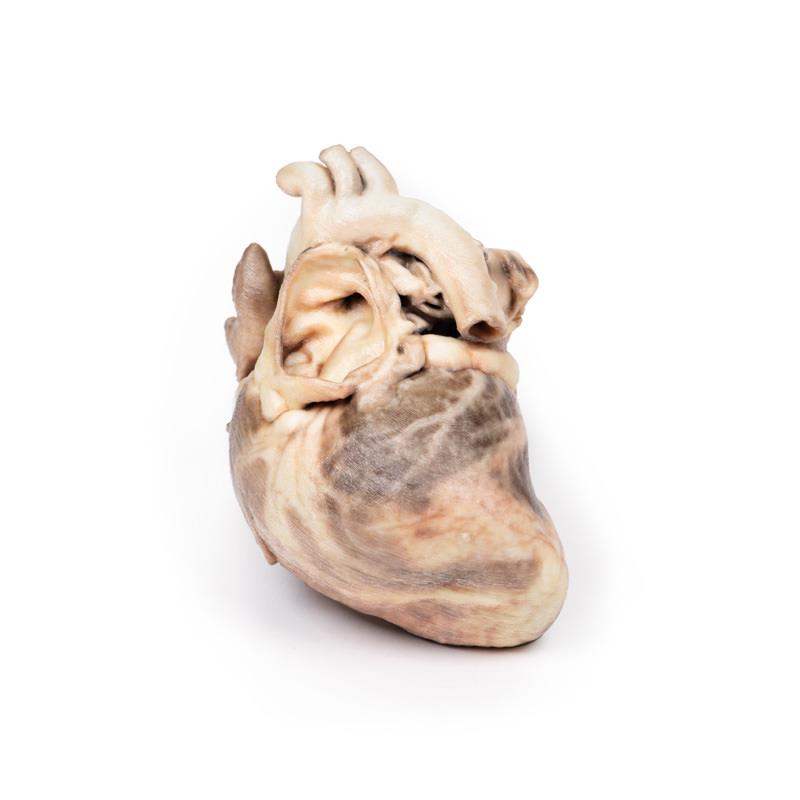
Heart anatomy models give Australian health-science educators a hands-on teaching tool that diagrams and textbooks cannot replicate. Whether you are equipping a university cardiology unit, a nursing skills lab, or a paramedic training programme, the right model helps students build spatial understanding of cardiac structure and function before they encounter real patients.
Why Heart Models Matter in Health-Science Education
The heart is one of the most complex organs students encounter in their training. Its three-dimensional structure — chambers, valves, vessels, and conduction pathways — is difficult to convey through two-dimensional images alone. A physical model lets students rotate, disassemble, and examine each component at their own pace, reinforcing what they have read and seen in lectures.
For nursing and paramedicine students, understanding cardiac anatomy underpins skills such as auscultation, ECG interpretation, and recognising signs of cardiac compromise. For medical and health-science students, it supports pathophysiology learning across conditions including heart failure, valve disease, and congenital defects.
Models also support repeated, self-directed study outside formal teaching hours — a practical advantage in programmes where lab time is limited.
Types of Heart Models Available
Heart models range from simple, single-piece display pieces to detailed, multi-part dissectible models that show internal chambers and valves. The main categories are
- Basic display models — life-size or enlarged, showing external cardiac anatomy. Suitable for introductory anatomy units and general health-science programmes.
- Dissectible models — open to reveal internal chambers, valves, and major vessels. Useful for cardiology, nursing, and paramedicine units where students need to understand internal structure.
- Pathology models — showing specific conditions such as atherosclerosis, valve stenosis, or congenital defects. These are particularly valuable for clinical education and case-based learning.
- Enlarged models — scaled up for group demonstration, allowing an entire class to see detail from a distance. Common in lecture theatres and large tutorial rooms.
Some models include colour-coded vessels and chambers to help students distinguish oxygenated and deoxygenated blood pathways — a feature worth prioritising for introductory-level teaching.
Key Features to Evaluate Before Purchasing
Not all heart models are built to the same standard. When assessing options for your programme, consider the following features.
- Anatomical accuracy — the model should reflect current anatomical understanding, with correctly proportioned chambers, valves, and vessels. Check whether the supplier references the anatomical standard the model is based on.
- Durability — models used in teaching labs are handled frequently. Look for robust materials that can withstand repeated assembly and disassembly without parts breaking or losing fit.
- Number of parts — more parts allow greater detail but also increase the risk of loss. Match the part count to your teaching context; a busy undergraduate lab may benefit from a simpler model than a postgraduate clinical unit.
- Scale — life-size models are appropriate for individual or small-group study; enlarged models suit group demonstration. Some programmes purchase both.
- Labelling — numbered or labelled structures reduce the time instructors spend orienting students and support self-directed learning.
Matching a Heart Model to Your Programme Level
The right model depends on the depth of cardiac anatomy your programme requires. An introductory allied health unit may need only a basic dissectible model showing the four chambers and major vessels. A nursing programme covering cardiac assessment will benefit from a model that also shows valve positions and the conduction system. A postgraduate cardiology or medical programme may require pathology models showing specific disease states alongside a standard anatomical model.
Paramedic and emergency nursing programmes often find pathology models particularly useful — showing conditions such as atherosclerosis or valve stenosis helps students connect anatomical knowledge to the clinical presentations they will encounter in the field.
If your programme uses case-based learning, consider purchasing a small set of pathology models alongside a standard heart model so students can compare normal and abnormal anatomy side by side.
Procurement Considerations for Australian Institutions
Australian universities and TAFE institutes typically procure anatomy models through a formal purchasing process. A few practical points are worth noting when planning a heart model purchase.
- Budget per unit — basic heart models are generally affordable; detailed dissectible or pathology models carry a higher price. Factor in the number of student groups who will use the model simultaneously when deciding how many units to purchase.
- Replacement parts — check whether the supplier can provide replacement parts for dissectible models. A model that cannot be repaired when a part breaks becomes a sunk cost.
- Quote process — many Australian institutions require a formal quote before raising a purchase order. Suppliers who can provide itemised quotes and respond to institutional procurement requirements make the process smoother.
- Delivery and lead times — some models are imported and may have longer lead times. Plan purchases well ahead of semester start dates.
If you are equipping a new anatomy lab or refreshing an existing one, it is worth requesting a quote for multiple items at once — suppliers can often provide better pricing on bundled orders. You can request a quote directly through The Anatomy Store.
Integrating Heart Models with Other Teaching Resources
Heart models work best as part of a broader teaching toolkit rather than as a standalone resource. Pairing a physical model with anatomical charts reinforces learning for students who benefit from visual reference alongside three-dimensional exploration. Charts and posters showing cardiac anatomy, the conduction system, or common pathologies complement a physical model well.
For programmes that include clinical skills training, heart models can be used alongside patient care simulators and auscultation trainers to build a more complete learning sequence — from understanding anatomy to practising assessment skills. Browse the full range of heart anatomy models available through The Anatomy Store, or explore the broader medical simulators range for clinical skills equipment.
When selecting resources, involve the academic staff who will use them in the decision. Educators who teach with a model every week will quickly identify whether it meets their needs — and their input is more reliable than a product description alone.