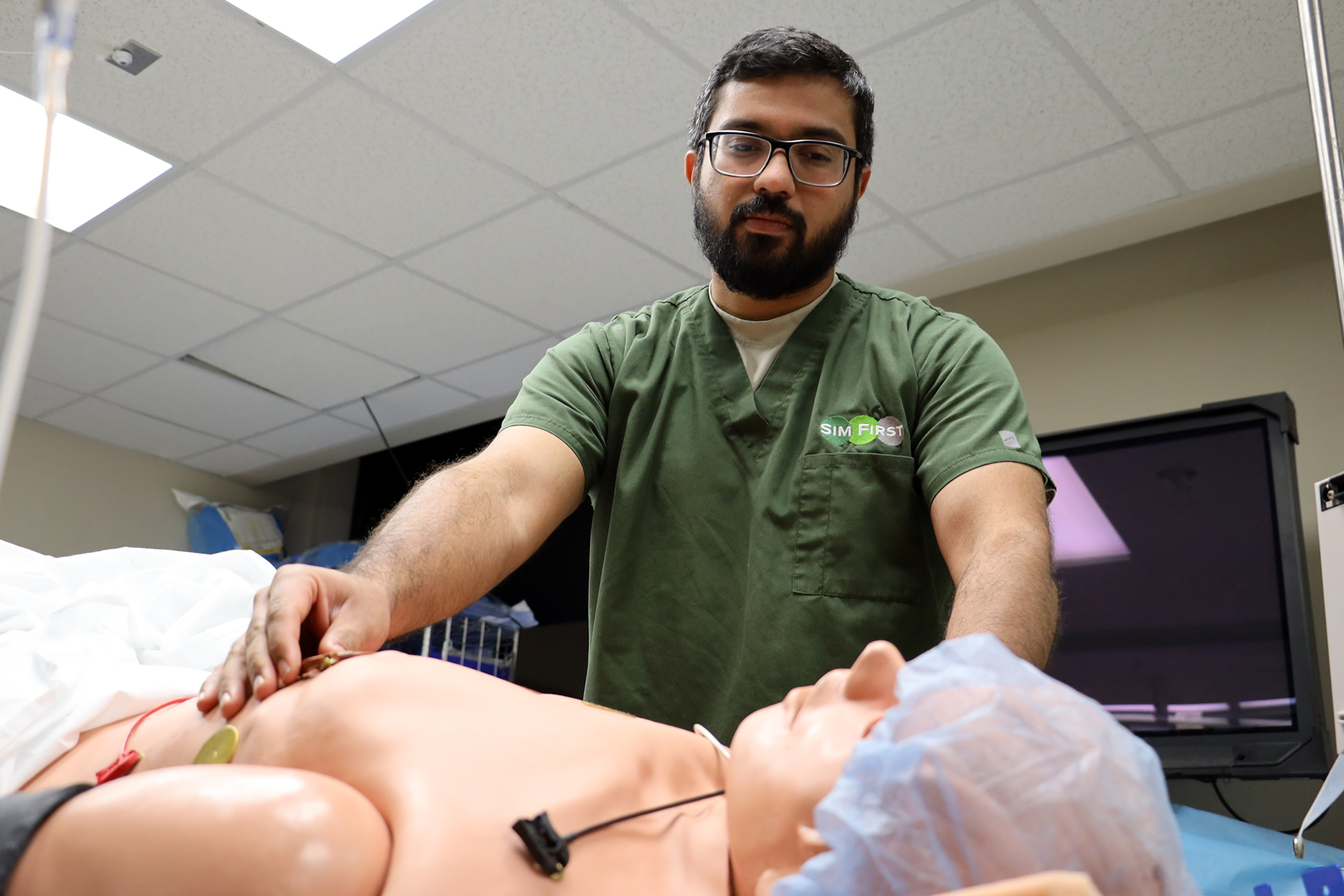
Walk into any major Australian university health sciences department today and you will find simulation labs filled with task trainers, manikins, and clinical scenarios running on a weekly basis. Simulation-based education has gone from a "nice to have" to a fundamental pillar of how we train the next generation of healthcare professionals.
The reason is simple. Traditional lecture-and-textbook learning builds knowledge. Simulation builds competence.
The Core Benefit — Learning Without Risk
Healthcare is one of the few professions where mistakes during training can cause serious harm or death. Simulation eliminates that risk entirely. Students can practise intubation, catheterisation, wound management, IV cannulation, and dozens of other procedures on anatomical task trainers before ever touching a real patient.
The evidence backs this up. Research consistently shows that clinicians who train with simulation demonstrate shorter procedure times, lower complication rates, and better clinical reasoning compared to those trained with traditional methods alone.
Practising for Events You Rarely See
Some of the most dangerous clinical situations are also the rarest. Cardiac arrest in a paediatric patient. Anaphylaxis during anaesthesia. Postpartum haemorrhage. A junior clinician might go years without encountering these events — but when they do, the response needs to be immediate and precise.
Simulation allows teams to drill these low-frequency, high-stakes scenarios repeatedly until the response becomes reflexive. This is the same principle used in aviation, where pilots train for emergencies they hope never to encounter.
Types of Simulation Tools
Task Trainers focus on a single clinical skill. IV arms, catheterisation trainers, suture pads, and injection simulators fall into this category. They are affordable, durable, and effective for building the muscle memory that underpins procedural competence.
Patient Simulators range from basic CPR manikins to advanced full-body simulators that breathe, bleed, respond to drugs, and generate realistic vital signs. These are used for scenario-based team training where communication and clinical decision-making are as important as technical skill.
Anatomical Models provide the foundational spatial understanding that makes procedural training effective. A student who has studied the anatomy of the airway on a detailed larynx model will perform better on a high-fidelity intubation simulator than one who has only read about it.
Wound and Trauma Simulators replicate injuries — burns, blast wounds, fractures, and bleeding — for pre-hospital and emergency medicine training. Military and paramedic programs rely heavily on these for field-readiness training.
The Australian Context
Australian healthcare education has been an early adopter of simulation. The Australian Society for Simulation in Healthcare (ASSH) has established national standards for simulation programs, and accreditation bodies increasingly expect evidence of simulation-based training in nursing, paramedicine, and medical curricula.
For regional and remote training facilities — common across Australia — simulation is particularly valuable. It allows clinicians in areas with lower patient volumes to maintain procedural competency without relocating to metropolitan centres.
Building a Simulation Program
Starting a simulation program does not require a million-dollar lab. A practical starting point for most Australian training facilities includes these essentials.
- Task trainers for the core procedures your students need to master (catheterisation, IV access, airway management)
- A basic life support manikin for CPR and BLS training
- Anatomical models for the body systems most relevant to your discipline
- A structured debrief process — the learning happens as much in the reflection as in the doing
We supply simulation equipment from leading manufacturers to universities, hospitals, and training providers across Australia and New Zealand. Browse our medical simulators or talk to our team about equipping your program.